
Master of Digital Health Student Spotlight: Richard Dinsdale
| 4 Min Read
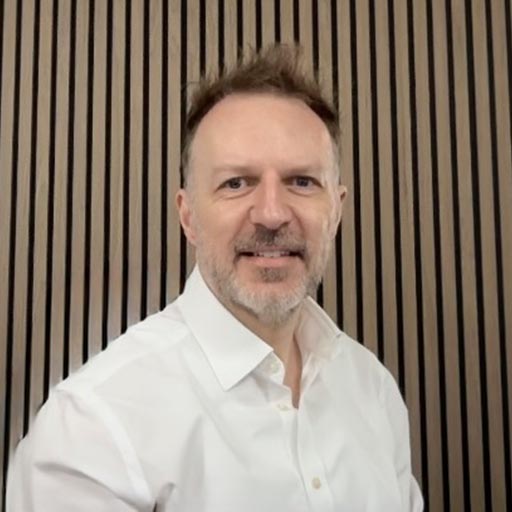
After working with Patient Administration Systems for 30 years, Richard Dinsdale undertook La Trobe’s Master of Digital Health to improve his practical knowledge and learn more about the concepts that drive digital innovation.
Throughout his career, Richard witnessed a range of technological advancements, from the introduction of email through to hospital clinical systems and later mobile apps.
In this spotlight, Richard shares what led him to study digital health, how digital health innovations have been shaping healthcare for decades, and how La Trobe’s Master of Digital Health has motivated him to continue studying into the future.
Why did you choose La Trobe’s Digital Health course?
A random late-night decision during lockdown had me initially enrolling in the graduate certificate, but I ended up moving to the Master of Digital Health, and five years later, here I am.
Many years ago, I undertook a Medical Record Administration degree at La Trobe, but I never worked in a hospital in any permanent role. Instead, I got the opportunity to work with one of the leading information systems vendors at the time, and that became my career, progressing through a number of roles from trainer to product management. Through those roles, I learned how important information systems were to hospitals, and how poor implementation could affect the efficiency of an organisation. I’ve seen and helped to manage the difference between an organisation “just turning on the new system” and really planning for change management and future workflows.
Throughout my career, I’ve worked with nearly every major acute hospital in South Australia, Victoria, Tasmania, NSW and QLD, as well as NZ and the UK. I’ve seen the transition from fax machines to email and green screen hospital systems to the introduction of email and fully web-based mobile applications. After thirty years working in health IT with Patient Administration Systems (PAS) and Electronic Medical Record (EMR) domains, digital health was the logical next step, and the Master of Digital Health course was a way to tie my experience together.
What were your favourite subjects in the course?
I particularly enjoyed the thesis subjects and writing the thesis itself. It was a major undertaking, but the opportunity to research and thoroughly explore my chosen topic was a great experience that solidified my understanding of some key concepts.
I also enjoyed subjects that related specifically to the digital health domain, such as Strategic Digital Transformation and Digital Health Design and Implementation. They were the subjects that provided the “aha!” moments and put names to ideas and concepts I’d used but never had explained to me.
Did you find anything in the course challenging?
Probably the biggest challenge was finding the time to study and the discipline to finish the readings, conduct research, watch tutorials, and complete assignments while balancing life commitments. Having a full-time job and moonlighting as a fitness instructor meant that balancing my schedule was difficult. However, when I put in the time and effort, I noticed the difference in grades. Spending the time paid off and meant what I took away from each subject was more than expected.
When I started the course, I thought that digital health was all electronic records and virtual consultation, but it’s more than that: it’s taught me real-world skills and put names to concepts that I’ve used or experienced in my career for years.
Please share a bit about yourself – what do you like to do in your free time?
There wasn’t a lot of free time between study, work, and family, so what free time I had was usually spent on resting. Now that I’ve completed the course, I can spend more time with family and friends, invest time in health and fitness, and enjoy other activities that went on hold while I studied.
Where would you like to be in 5 years’ time?
While I hope to be more relaxed and more travelled in five years’ time, the plan from here is further study. I’d like to undertake my professional doctorate next, so the remainder of 2026 will be spent considering a research proposal for a Professional Doctorate (PRD) with both the university and my employer. It’s an exciting collaboration, as working in the EMR space will provide an excellent opportunity to apply the research to real-world projects.
At La Trobe University, students of the Master of Digital Health complete their studies equipped to lead meaningful change in healthcare. Combining practical insights with digital innovation, they are industry-ready to shape healthcare delivery with clinical skills, technical fluency, and strategic thinking.
Learn more about La Trobe’s online Master of Digital Health course or get in touch with our team of Enrolment Advisors via (+61 3) 9917 3009 or onlinecourses@latrobe.edu.au.